In Western esoteric traditions and some folk-medicine cosmologies, Autumn is associated with the element of Water. Water speaks to ebbs and flows, to being in between, and to transition. Autumn embodies that in-between state: it bridges Summer and Winter, carrying us from one season into the next.
Many ancient cosmologies did not separate the spiritual from the natural world. The elements were understood as patterns woven through the world around us and through human life. We might recognize qualities of Air, Fire, Water, and Earth in ourselves, too. Each element can be gentle or fierce. Think of water on a still lake or moving through a river, then think of a hurricane or a flood. Without banks or boundaries, water can destroy. And still, it is necessary for life.
Water represents our emotions and our ability to be with them: to feel them in our bodies and move with them without letting them overtake us. Tears are one way the body releases emotion. I find it helpful to give myself structured time in my morning practice to drink tea made with Autumnal herbs, diffuse essential oils or light incense, journal, read sacred texts, and ask myself how I’m doing and what I’m feeling. Then I ask how I’d like to express what’s there and let my intuition answer. It might be through movement and music, or through a creative practice. That time helps me keep my emotions from spilling into the rest of my day.
Water also represents intuition and receptivity. Connecting with myself this way helps me lead from intuition instead of from my head, past hurts, or resentments. Once I’ve made room for what I’m feeling, I can move through the day with more steadiness and connection. A creative practice can open a flow state, where I can hear what my soul has to say. When we give ourselves some structure for feeling into our emotions, intuition, and desires, we can find a state of grace. And being in a state of grace is always my prayer.
One of my teachers has a saying I love: “Focus + fluidity = flow.” That equation works for me. I’m mostly an Earth, Fire, and Air person. I love focus and structure, so I have to practice fluidity and letting go of control. When I do, things really can flow, because I’m no longer gripping so tightly to an expected outcome.
Autumn also marks a transition in our bodies, minds, and souls. Our diets begin to shift from light, cooling foods and Summer fruits and vegetables toward roots, breads, soups, stews, and warming comfort foods. As the days grow darker, we may want to cocoon a little. But life keeps lifing, and the modern world isn’t always set up to honor seasonal transitions. Our bodies may yearn to follow nature’s rhythm even when work and daily obligations don’t make room for it. Sometimes, when we don’t listen to the body’s cues to slow down, illness or exhaustion can be the signal that we need to pause.
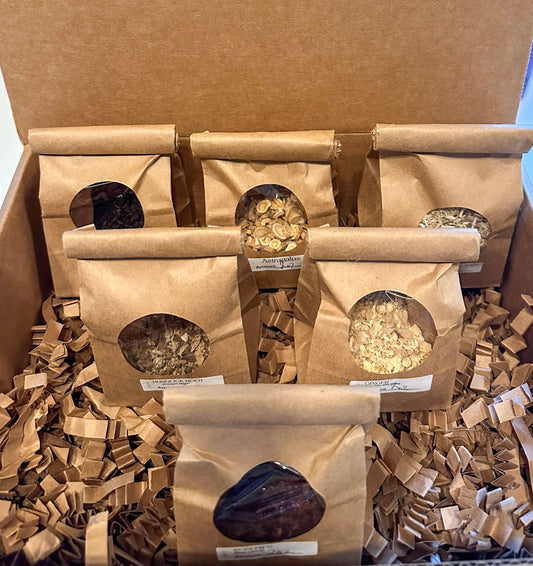
This is a good time to choose herbs that help us feel emotionally supported and rooted, and that make room for rest, relaxation, and seasonal wellbeing. We want to put things in our bodies that feel like a warm hug from the inside. I want to share some of my favorite herbs for this time of year—the ones I use in teas, and some I place on my Autumn altar to spend time with during my morning practice. We also lovingly created a seasonal recipe book with lots of ways to use herbs and foods to support your inner and outer worlds.
Mugwort
Mugwort feels like a plant for the waters beneath the surface: the dreams, memories, and feelings that rise when the outer world grows quiet. In traditional herbal practice, its aromatic bitterness has been used to support digestion and menstrual flow, giving it a physical relationship with movement—helping what feels stagnant find a current again. Emotionally, mugwort is often approached as a dream and threshold plant, an ally for listening inward and meeting what is ready to be remembered. Mugwort is generally avoided during pregnancy, and its safety for internal or topical use hasn’t been well established.
I use mugwort in tea, burn it as incense on charcoal, sew it into dream pillows, or simply tuck it into a sachet under my pillow when I want to invite dreaming.
Blue Lotus
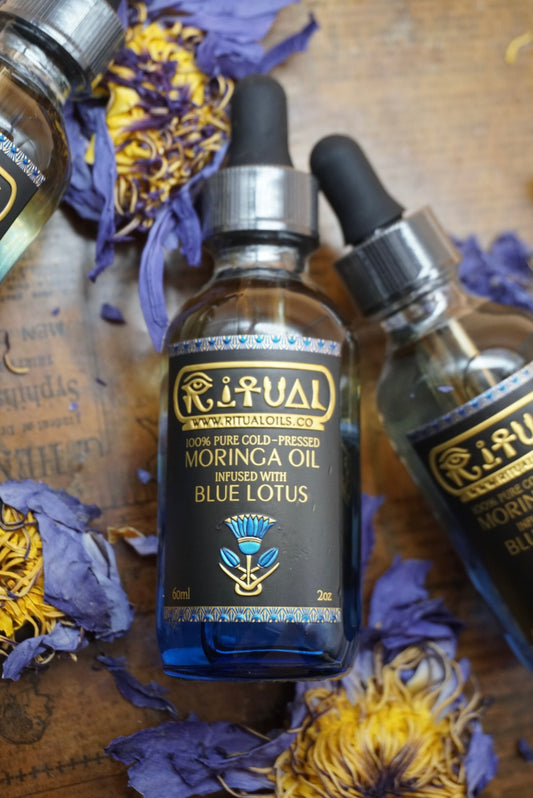
Blue Lotus belongs to water in the most literal way: its flower opens above the water’s surface, a luminous presence rooted in the depths. It appears in ancient Egyptian art and has a history of ritual use. Today, it is often approached as a contemplative flower associated with rest, sensuality, and altered states of awareness. Its emotional invitation is to soften the boundary between waking thought and dream, letting beauty and stillness take the lead for a while.
Blue Lotus is my go-to when I choose to paint or do a creative practice because I find it opens up the lens of possibility. I steep a flower and drink the tea with a little honey, or anoint myself with Blue Lotus oil. I often do both. Modern safety research on Blue Lotus, especially for products taken internally, is limited, so I’m careful about the source and form I use.
Passionflower
Passionflower climbs by tendrils, reaching outward while holding fast to whatever will support it—a lovely image for navigating emotional currents without being swept away by them. Traditionally used as a calming herb, it has a particular affinity for the body’s restless edges: the mind that keeps circling, the shoulders that won’t drop, the difficulty of settling toward sleep. Its emotional teaching isn’t to shut feeling down, but to create enough quiet around it that we can hear what it’s asking for.
Passionflower is one of my favorite evening wind-down herbs. It can cause drowsiness, should not be used during pregnancy, and calls for extra care around surgery and sedative medications.
Elder
Elder is a tree of thresholds: Spring flowers become Autumn berries, carrying us through a visible transformation from blossom to fruit. Elderflower has a traditional place in herbal preparations for early symptoms of a common cold. I think of its relationship with water through a warm cup of tea and the gentle release of perspiration.
Emotionally, elder speaks to the wisdom held in community, kinship, and the turning of seasons. It reminds me that change isn’t always a loss; sometimes it’s the ripening of what has been quietly gathering. I work with elder when I’m connecting with my elders. I’ll talk about ancestral connection more deeply next week. If you work with elderberries, use them properly prepared: raw or unripe berries, leaves, and stems can cause illness.
Catnip
Catnip is a softer current: a plant that can help the body loosen its grip when tension has knotted itself into the belly or the nerves. In traditional herbalism, it has been used for digestive spasms, indigestion, nervousness, and restlessness. Its water element is less the deep, mysterious lake and more the warm bath after a long day—the permission to settle, digest, and stop bracing for the next thing. Emotionally, catnip carries a little playfulness along with its calm. It reminds us that ease doesn’t have to be solemn.
Chamomile
Chamomile offers water as comfort: a familiar cup held between both hands, warmth entering the body one small sip at a time. Traditionally used for digestive discomfort and calming, it has a gentle relationship with tension in the belly and the emotional tightness that can accompany an unsettled day. Its flowers suggest an ordinary tenderness—not a grand revelation, but the reassurance that we can soften a little and begin again. People with allergies to ragweed and related plants may also react to chamomile.
I hope you’ll consider trying a morning practice and an evening wind-down, especially as we move from Summer’s outward, fiery expression into the darker part of the year. The holidays can pull us outward, too, with their own chaos and emotional currents. Take advantage of this transition. Create practices and structures that work for you, and set the inner or outer boundaries you need to make room for yourself.