


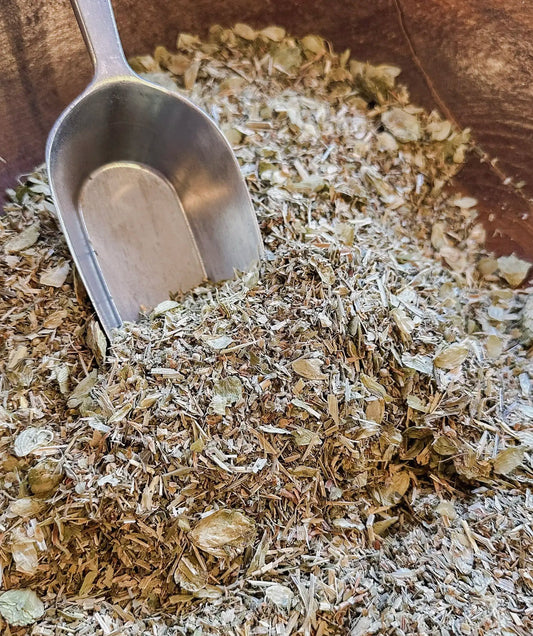


When most people think of catnip, they imagine their feline friends rolling in blissful ecstasy. But Nepeta cataria, with its heart-shaped leaves and delicate lavender flowers, it is far more than a kitty carnival. For humans—children and adults alike—this humble mint family plant has long been treasured as a gentle healer, soothing tonic, and spiritual ally used by people around the world since time immemorial. It is truly one of the "medicine of the people" plants. Accessible and easy to grow, gentle yet very effective. It is one of our go-to's for use with children. Unlike cats, for us it is a calming herb for the nervous system but also for the musculoskeletal system.
My first introduction to using catnip for anything besides watching my cat do zoomies was when I was studying with Susun Weed many years ago. She said the fastest way to sooth menstrual cramps was to smoke catnip. I remember laughing and saying no way, thinking of all the kids trying to pass off catnip as weed when I was in high school. But one day when I was having awful cramps I thought, why not? So I rolled some up and smoked it and I kid you not my cramps were gone instantly, not to mention the overall calming effects. Many years later this is the first thing I suggest when a woman says she is dealing with cramps.
So let’s wander into its medicine chest and folklore.
🌿 Physical Uses
Catnip has been used across cultures as a mild, safe herb for the whole family.
- Digestive Soother: Traditionally brewed as tea for upset stomach, gas, and colic. In children, it has been a go-to remedy for colicky babies (though always diluted and used cautiously). 1 tsp of tea is enough.
- Calming Nervous System: Acts as a gentle sedative, helping relieve tension, restlessness, and trouble sleeping.
- Cold & Flu Ally: Encourages mild sweating, helping the body release fevers. Often paired with elderflower and yarrow for classic “sweat-inducing” teas.
- Menstrual Support: Relieves cramps by relaxing smooth muscle. It is also very helpful when menstruation is preceded by agitation and anxiety.
- Musculoskeletal relaxant: Helps relax tense muscles, body aches, I especially like using it infused in 1 part Evening Primrose Oil and 3 Parts Jojoba Oil and massaging it into sore or tense areas. This also makes a nice abdominal massage blend for belly and menstrual cramping. I think it does a great job working on tense neck muscles caused by stress or somatic postural habits from holding stress, especially those that result in tension headaches.
- Topical Aid: Infused oil or poultice may ease minor skin irritations and insect bites.
💗 Emotional & Spiritual Uses
Catnip is not just for the body—it has a tender way of wrapping around the spirit.
- Emotional Calmer: Used for irritability, especially in children who are “too wound up” or overtired.
- Anxiety Soother: Its gentle sedative quality has been likened to a lullaby in a teacup.
- Spiritual Ally: Some traditions view catnip as an herb of joy, attraction, and playfulness, reminding us of innocence and delight. It is said it can even be sprinkled around the house or place of work so that all who may enter do so with joy.
- Dreamwork: Catnip has been included in dream pillows for restful, prophetic, or light-hearted dreams.
Animistically, catnip teaches the medicine of softening—letting go of tension, surrendering to play, and remembering that joy is a form of resilience.
🌍 Cross-Cultural Uses & Folklore
- European Folk Medicine: Widely used in England and France as a household children’s herb.
- Native American Uses: The Cherokee and other tribes used catnip for infant colic, digestive troubles, and as a mild poultice for fevers and swelling.
- Magical Associations: In European magical traditions, catnip was thought to draw good luck and love. Some carried it in a pouch to increase charisma or attraction.
- Cat Connection: Of course, its link to cats is legendary. In folklore, catnip was sometimes planted around homes to attract protective cat spirits or used in spellwork for strengthening bonds with cats. My relationships are with the big kitties for big energy and big protection!
🧪 Methods of Making Medicine
Catnip is versatile in preparation. Here are a few ways to work with it:
- Infusion (Tea): A teaspoon of dried herb per cup of hot water. Excellent for colds, fevers, digestion, and relaxation. For children, use a weaker infusion (½ teaspoon per cup).
- Tincture: Fresh or dried herb extracted in alcohol or glycerin. Useful for quick calming effects or colic drops (glycerite is preferable for children). Because of the versatility and gentleness of this herb we have chosen catnip to be the first glycerite we offer at Anna's!!! Glycerites are ideal for children and for people who cannot or choose not to ingest alcohol. This will be the first of many alcohol-free formulations as we expand our line to include kids and those in sobriety.
- Syrup: Catnip tea simmered with honey—soothing for coughs and kids.
- Topical Uses: Infused oil for skin irritations, or poultice of fresh leaves for insect bites.
- Dream Pillow: Dried catnip combined with lavender, chamomile, or mugwort to encourage restful or magical dreaming.
⚠️ Contraindications
- Generally considered safe for children and adults in appropriate doses.
- Avoid in pregnancy—catnip can stimulate uterine contractions.
- Overuse may cause nausea or vomiting.
- As always, consult with a qualified herbalist or healthcare provider before giving herbs to infants or children.
🌸 Closing Thoughts
Catnip is a reminder that some of the most powerful medicine is gentle, playful, and accessible. While cats may claim it for ecstatic rolling, humans, too, have long turned to Nepeta cataria for calm, comfort, and joy.
It bridges the worlds—medicine for the belly, the nerves, the heart, and the spirit. To sit with a steaming cup of catnip tea is to sip a little wild kindness, letting the body rest and the soul remember its lightness.

